The Smallest Capital You Will Visit

Vientiane

A capital city that feels like a market town with a golden stupa in it. Two days is plenty, and one of them should include the strangest sculpture garden in Southeast Asia.

Vientiane is the smallest national capital in Southeast Asia and it feels it, in a way that people either take to immediately or find underwhelming. There is a golden stupa on the national emblem, a French-style arch built with American cement, the oldest temple in the country, and a riverfront promenade where the whole city walks in the evening. That is most of it, and it fits comfortably into a day and a half.

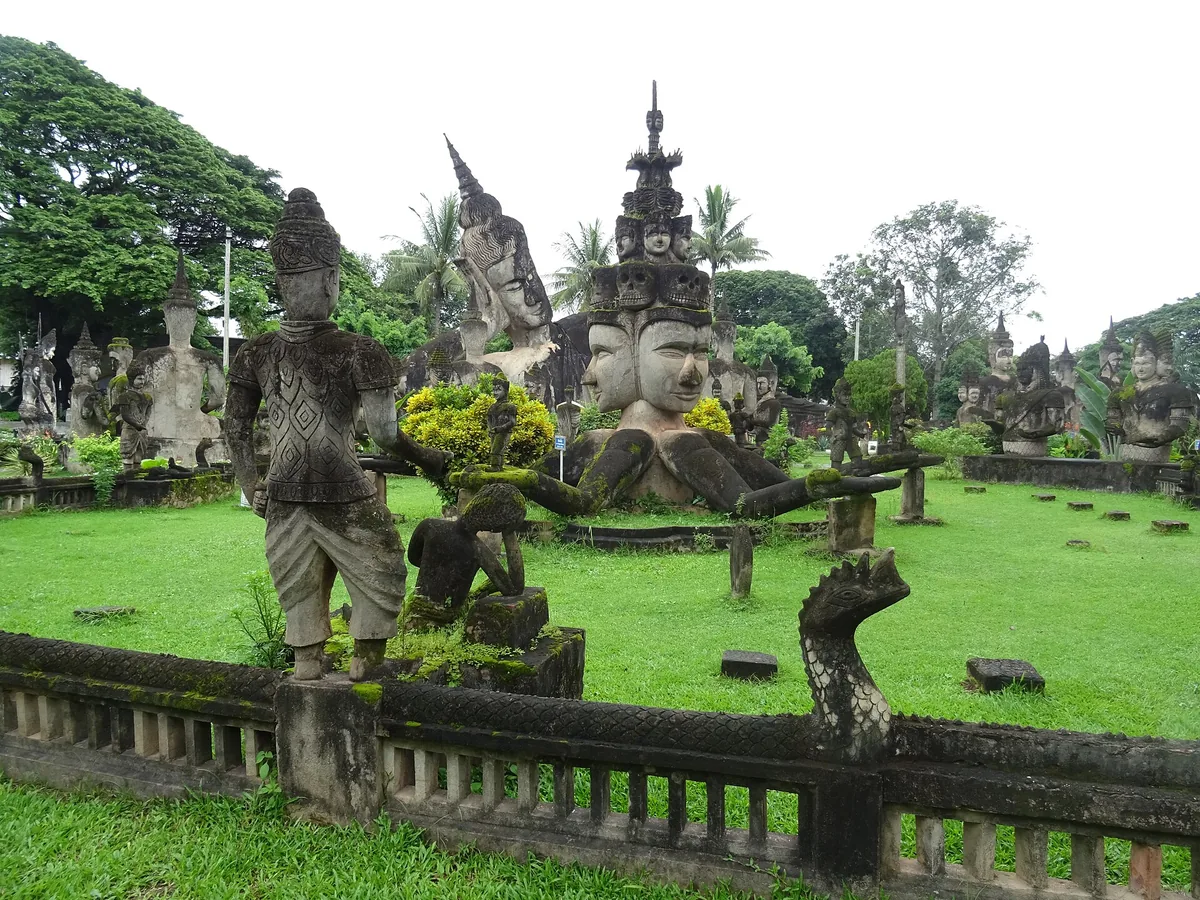
What lifts it above a stopover is Buddha Park — two hundred concrete gods and monsters in a meadow by the Mekong, built from 1958 by a man who saw no reason to keep Hinduism and Buddhism apart — and the COPE centre, which explains the unexploded ordnance still lying across the east of the country, and does it without a raised voice.

Almost everybody arrives here at one end of a Laos trip. One night on the way out is the common shape; two lets you do Buddha Park properly, which is the version we would recommend.

Airport
Wattay International (VTE)
4 km from the centre, about fifteen minutes. International, but nothing direct from India — you connect through Bangkok or Hanoi.
Best months
November to February
Dry and warm rather than cold — this is the lowlands, and it does not get the chill Luang Prabang does. April is punishing.
Temperature
17 to 35°C
Hotter than the north all year. Do the outdoor half of the day before eleven between March and May.
Nights to allow
1 to 2
One night and a morning covers the temples and the stupa. Two lets you add Buddha Park and the COPE centre without rushing either.
Money
Kip, dollars or baht
All three circulate. Cards work at hotels and better restaurants; the market and the tuk-tuks are cash.
Getting around
Tuk-tuk, and walking the centre
The riverfront, Wat Sisaket and the presidential palace are a walkable cluster. That Luang is three kilometres out and Buddha Park twenty-five.

On the ground

Getting in, and getting around

Getting in

For Indian passports

Indian passport holders get a visa on arrival at Wattay international airport and at the Friendship Bridge land crossing from Nong Khai in Thailand. Thirty days. Two photographs and the fee in US dollars, in cash.

Nothing flies here from India non-stop. Bangkok is the usual connection and the shortest one; Hanoi works if you are combining Laos with Vietnam.

The overland route matters more here than anywhere else in the country. If you are already in Thailand — Bangkok, Udon Thani, Nong Khai — the Friendship Bridge is a straightforward two hours from Udon Thani airport and lands you in the capital. We arrange it either way.
Getting around

The old centre is small enough to walk: the riverfront, Wat Sisaket, Haw Pha Kaeo and the shops between them fit in a rectangle you can cross in twenty minutes. That is most of what a visitor does here.

The two big sights are not in it. Pha That Luang is three kilometres northeast, past Patuxai on a boulevard built to look like a French one, and Buddha Park is twenty-five kilometres southeast by the Friendship Bridge. Both want a vehicle; both are worth the drive.

Tuk-tuks are the default and there is no meter, so agree the fare first — and agree a return if you are going out to Buddha Park, because finding a ride back from a sculpture field on the Thai border is a comedy you do not want to be in. Loca is the local ride-hailing app and works in the city.

Decide first

Where to stay, and who each one suits

On the Mekong promenade 15 to 20 minutes from the airport

Choose it if

  • You have one evening here and want it to be the good one — the night market sets up on the promenade and the sunset is over the river.
  • You want to walk to dinner, to the temples and to the morning market.
  • It is your first night in Laos or your last. Everything is close and nothing needs planning.

Think twice if

  • You are here in the dry season expecting a wide river. The Mekong drops a long way and what you look at is often sandbank.

Decide second

When to travel, month by month

taller bar means more rain

Pick a month to read it in full.

Cool and dry

January

Rain
Dry
How busy
Busy
Daytime
17 to 29°C

The pick of the year. Warm days, comfortable evenings on the promenade, and no rain. The river is low, which is the one cost.

Decide third

How long, and what shape

The stopover

1 night

  1. Day 1 Arrive, Wat Sisaket and Haw Pha Kaeo, then the riverfront market at dusk.
  2. Day 2 That Luang and Patuxai in the morning, and out.

What the five-night Laos trip does on its way home, and it is enough.

The capital properly

2 nights

  1. Day 1 Arrive and walk the old quarter. Sunset on the promenade.
  2. Day 2 Wat Sisaket, Haw Pha Kaeo, COPE, Patuxai, That Luang.
  3. Day 3 Buddha Park in the morning, Talat Sao, and the flight.

The second night is what makes Buddha Park possible. It is worth it.

What you came for

Popular places to see in Vientiane

  1. Pha That Luang

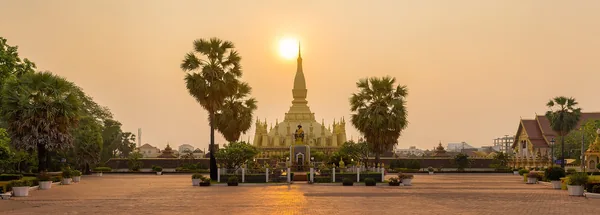
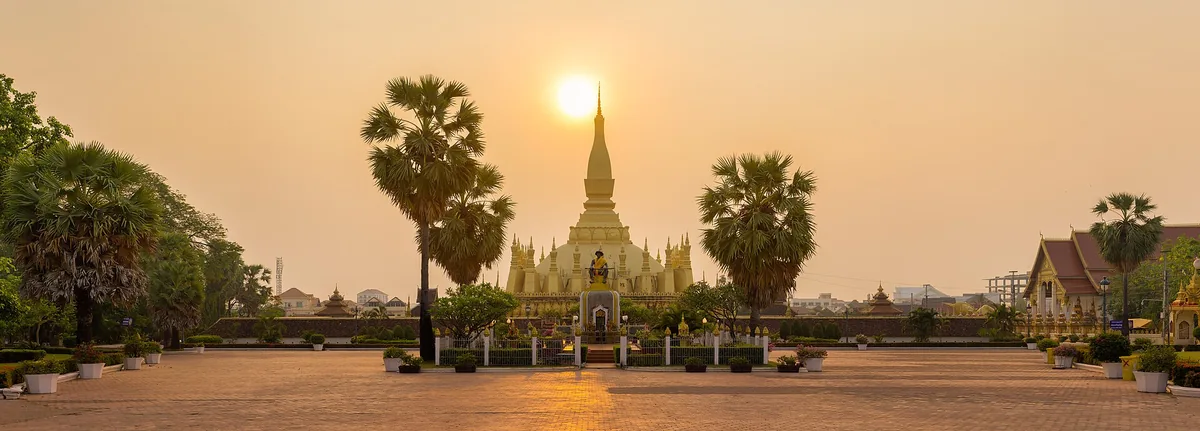
    The golden stupa on the national emblem, and the most important monument in the country. Built in 1566 over an earlier Khmer site, flattened by a Siamese army in 1828 and rebuilt from a French sketch in the 1930s.

    Best in late afternoon, when the gold takes the light. Shoulders and knees covered.

  2. Patuxai

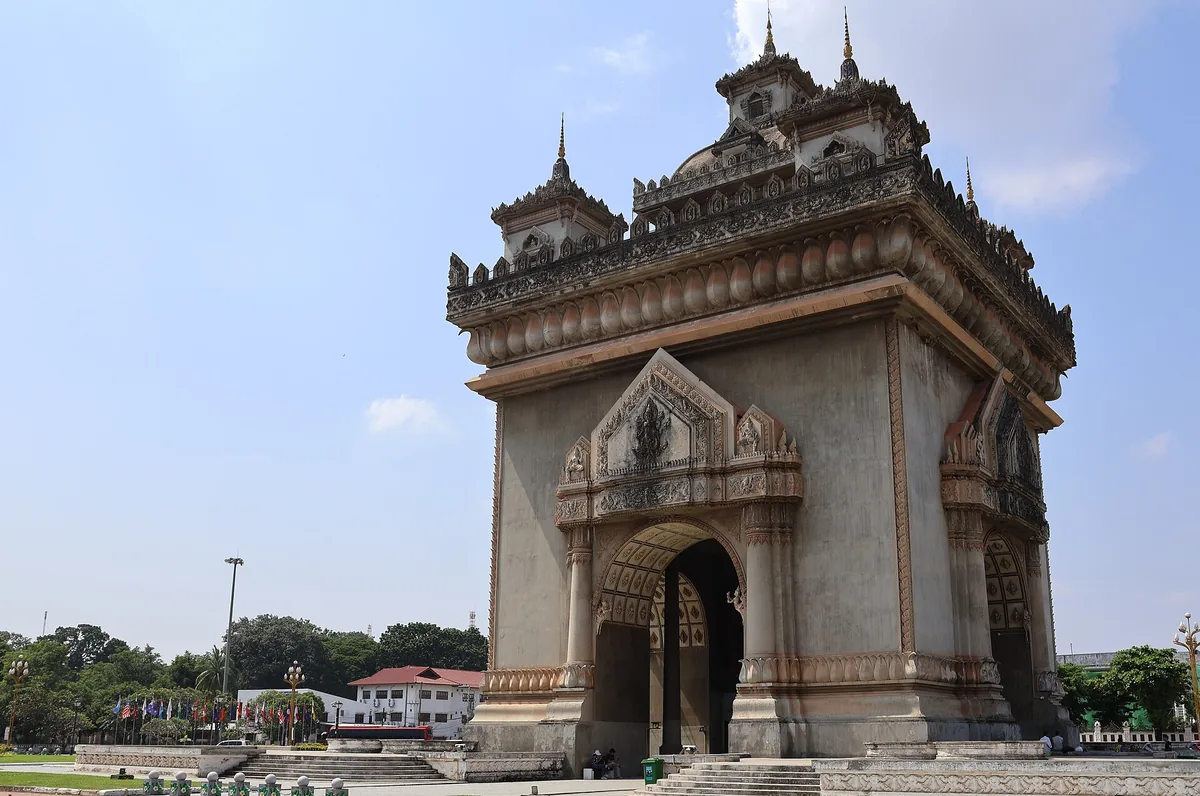
    Vientiane's arch, finished in 1968 with cement the United States had supplied for an airport runway — a fact the plaque on it states with some relish. Climb it for the best view of the city.

    Seven storeys, stairs only, and a small fee at the top floor.

  3. Wat Sisaket

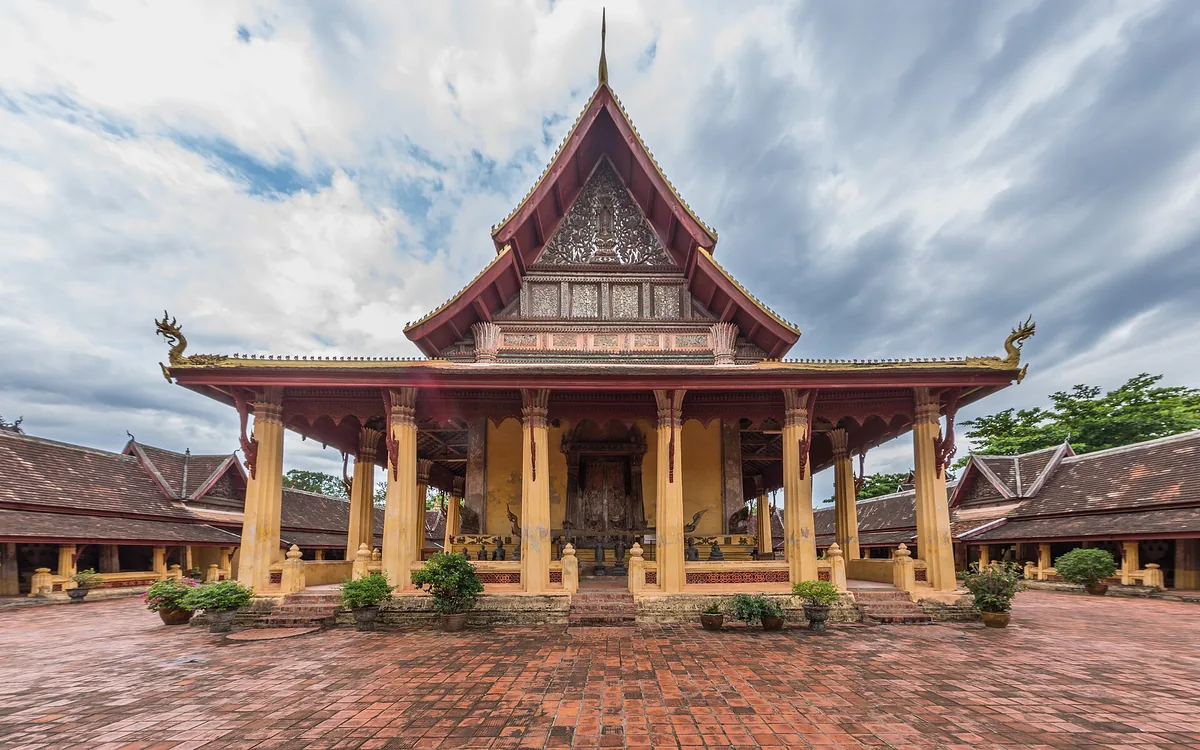
    The oldest surviving temple in the city — the one building the Siamese left standing in 1828 — with a cloister wall holding several thousand small Buddha images in niches.

    The quietest place in the capital at nine in the morning. Take the time.

  4. Buddha Park (Xieng Khuan)

    Two hundred concrete Buddhist and Hindu sculptures in a riverside meadow, built from 1958 by a priest-shaman with his own ideas about both religions. It is genuinely strange and completely unmissable.

    Twenty-five kilometres out by the Friendship Bridge. Arrange the return trip before you set off.

  5. The COPE visitor centre

    A small, well-made museum about unexploded ordnance and the prosthetics programme for people injured by it. It is the honest half of the Laos story and it takes an hour.

    Free, and it asks nothing of you. Children over about twelve handle it well.

  6. Talat Sao and the riverfront market

    The morning market for silver, textiles and everything else; the promenade market at dusk for street food and the sunset over Thailand.

    Two different markets at two different ends of the day. Do both.

Small print

Worth knowing

One full day is genuinely enough

This is the smallest capital in Southeast Asia and it does not pretend otherwise. Do not budget three nights here at the cost of a night in Luang Prabang — that is the trade nobody gets right the first time.

Arrange the ride back from Buddha Park

It is twenty-five kilometres out at the Thai border and there is nothing waiting at the gate. Keep the tuk-tuk or the car for the round trip.

The COPE centre is worth an hour

Laos is the most heavily bombed country per head in history and this is the one place that says so plainly. It is not grim for its own sake, and it changes what the rest of the trip means.

Do not photograph anything military

Installations, personnel, checkpoints. This is a one-party state and that particular rule is enforced. Nothing else about being here feels restrictive.

Not sure where to start?

Talk to someone who has been. We will tell you honestly whether Vientiane suits the trip you have in mind.