The Whole Town Is the Monument

Luang Prabang

UNESCO listed the entire peninsula, not one building on it. Temples, a French main street, a night market you can walk end to end, and a waterfall an hour south that is as good as its photographs.

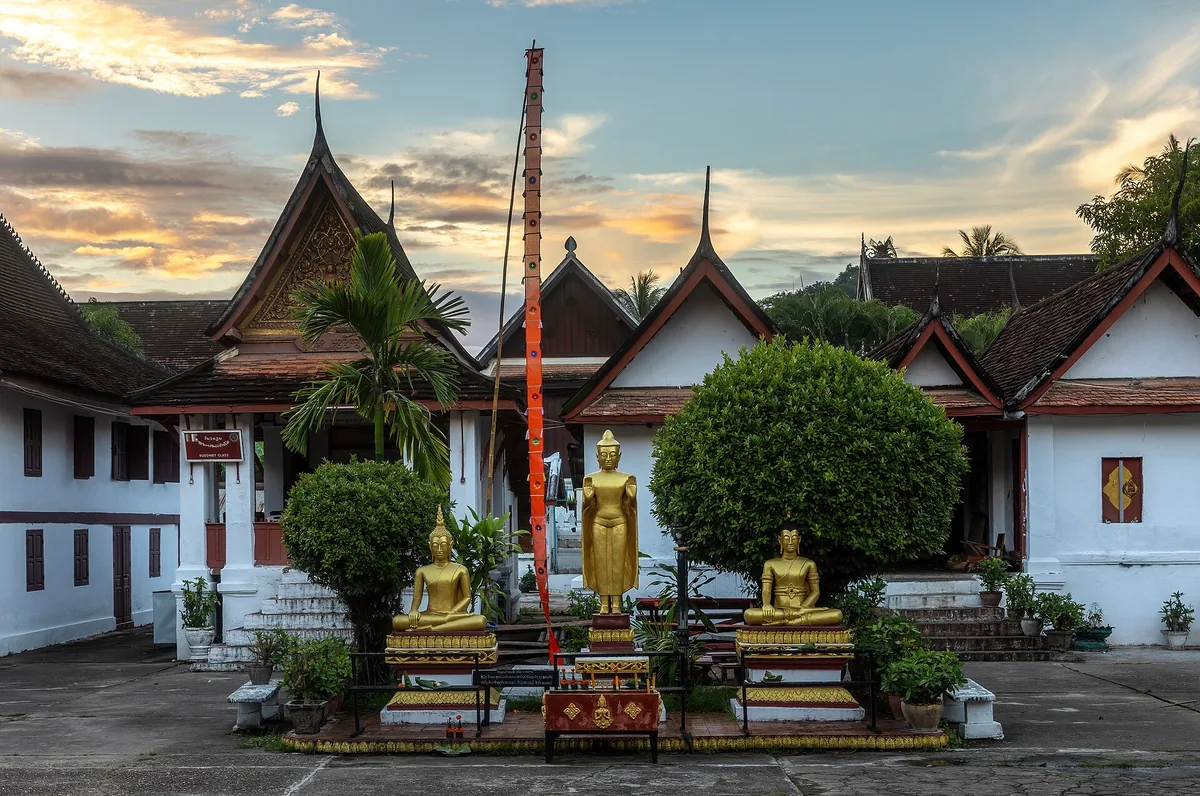
Luang Prabang is the reason people come to Laos, and it is the rare place that is better than the way it gets described. UNESCO listed the whole peninsula in 1995 — not a temple in it, the town itself — and the protection has held. There are no towers, no chain signage on the main street, and the tallest thing you see is still a temple roof.

What that gives you is a kilometre of French shopfronts and gilded monasteries between two rivers, where the useful mode of transport is your own legs. Thirty-three working temples sit inside it, and the orange robes on the street in the morning belong to people who live in them.

Two nights covers it properly: the town on foot, the boat up the Mekong to the Pak Ou caves, and the waterfall at Kuang Si. A third night is what makes the dawn alms round possible without sacrificing a morning you needed for the flight.

Airport
Luang Prabang (LPQ)
4 km from the peninsula, ten minutes by road. International, but not from India — you connect, most often through Bangkok.
Best months
November to February
Dry, clear and cold enough at dawn to want a jacket. March and April bring the burning haze; June to September is green and wet and cheap.
Temperature
15 to 34°C
December and January mornings drop to single figures on the river. Take one warm layer even in a Southeast Asia suitcase.
Nights to allow
2 to 3
Two covers the town and the waterfall. A third buys the alms round without a 5am rush on your last morning.
Money
Cash, in kip or dollars
Cards work at hotels and almost nowhere else. The night market, the tuk-tuks and the small restaurants are cash only.
Getting around
On foot
The peninsula is about a kilometre end to end. Tuk-tuks handle the waterfall and the airport; you will not need anything else.

On the ground

Getting in, and getting around

Getting in

For Indian passports

Indian passport holders get a visa on arrival at Luang Prabang international airport. It runs 30 days. Bring two passport photographs and the fee in US dollars, in cash — the desk does not take cards, and the rate it offers for anything else is poor.

Your passport needs six months of validity. We confirm the current fee in writing when we quote, because it has moved more than once and differs by nationality at the same counter.

There is no non-stop flight from India. Everyone connects, most often through Bangkok — around four hours to Bangkok and two on to Luang Prabang. Build in a long layover or an overnight rather than a 70-minute connection.
Getting around

The old town sits on a peninsula between the Mekong and the Nam Khan, and it is small — roughly a kilometre long and three streets wide. Everything you came for is inside that, which means the honest answer to how you get around Luang Prabang is that you walk.

Tuk-tuks cover the two things that are not walkable: the airport, ten minutes out, and Kuang Si, an hour south. Agree the fare before you get in — meters do not exist here — and if you are going to the falls, agree the waiting time too, because there is nothing to flag down at the other end.

Phousi hill, in the middle of the town, is 328 steps and the sunset view everybody climbs for. It is also, by six in the evening, the most crowded 40 square metres in Laos. Go up at four instead, or take the boat and watch the same sun from the river.

Decide first

Where to stay, and who each one suits

Inside the old town 10 to 15 minutes from the airport

Choose it if

  • You want to step out of the hotel into the town rather than into a car park.
  • The alms round passes along Sakkaline and Sisavangvong at dawn — from here you are already there, without a taxi at five in the morning.
  • The night market sets up on the main street every evening and packs away by ten.
  • Two nights only. Every minute you do not spend travelling is a minute in the place you came for.

Think twice if

  • You want a resort with a pool. The heritage rules that keep this town beautiful also keep the buildings small.
  • You are a light sleeper and the temple drums at dawn would bother you. They are part of the deal here.

Decide second

When to travel, month by month

taller bar means more rain

Pick a month to read it in full.

Cool and dry

January

Rain
Dry
How busy
Busy
Daytime
15 to 28°C

The best month and the busiest. Cold at dawn — genuinely cold on the river — and bright all day. Kuang Si is at its most turquoise. Book the good small hotels months out.

Decide third

How long, and what shape

The short one

2 nights, 3 days

  1. Day 1 Land, walk the peninsula, night market and an early dinner.
  2. Day 2 Morning market, Wat Mai, the Royal Palace, Wat Xieng Thong; boat to Pak Ou after lunch.
  3. Day 3 Kuang Si in the morning, then the airport.

Tight but complete. This is the trip we sell most often.

With the alms round

3 nights, 4 days

  1. Day 1 Land and settle. Sunset from Phousi or from a boat.
  2. Day 2 The town on foot, then the Mekong to Pak Ou.
  3. Day 3 Tak Bat at dawn, back to bed, Kuang Si after breakfast.
  4. Day 4 Morning market and out.

The extra night is what makes the dawn ceremony possible without wrecking a travel day.

Down the railway

5 nights, 6 days

  1. Day 1 Luang Prabang — arrive.
  2. Day 2 The town and Pak Ou.
  3. Day 3 Kuang Si, then the train south to Vang Vieng.
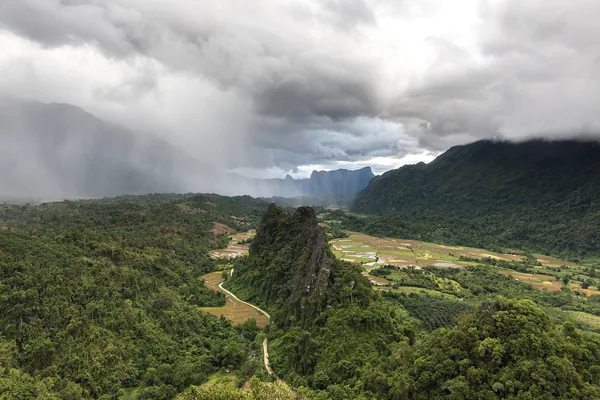
  4. Day 4 Vang Vieng — caves, the river and the karsts.
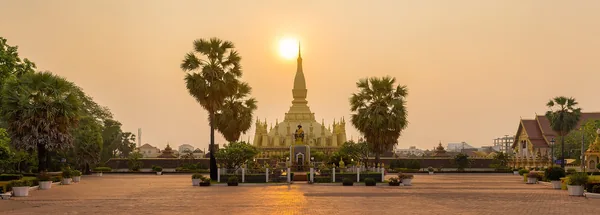
  5. Day 5 Train to Vientiane.
  6. Day 6 The capital in a morning, and home.

The version worth doing if you have the days. The railway opened in 2021 and turned a two-day road journey into an hour.

What you came for

Popular places to see in Luang Prabang

  1. Kuang Si Falls

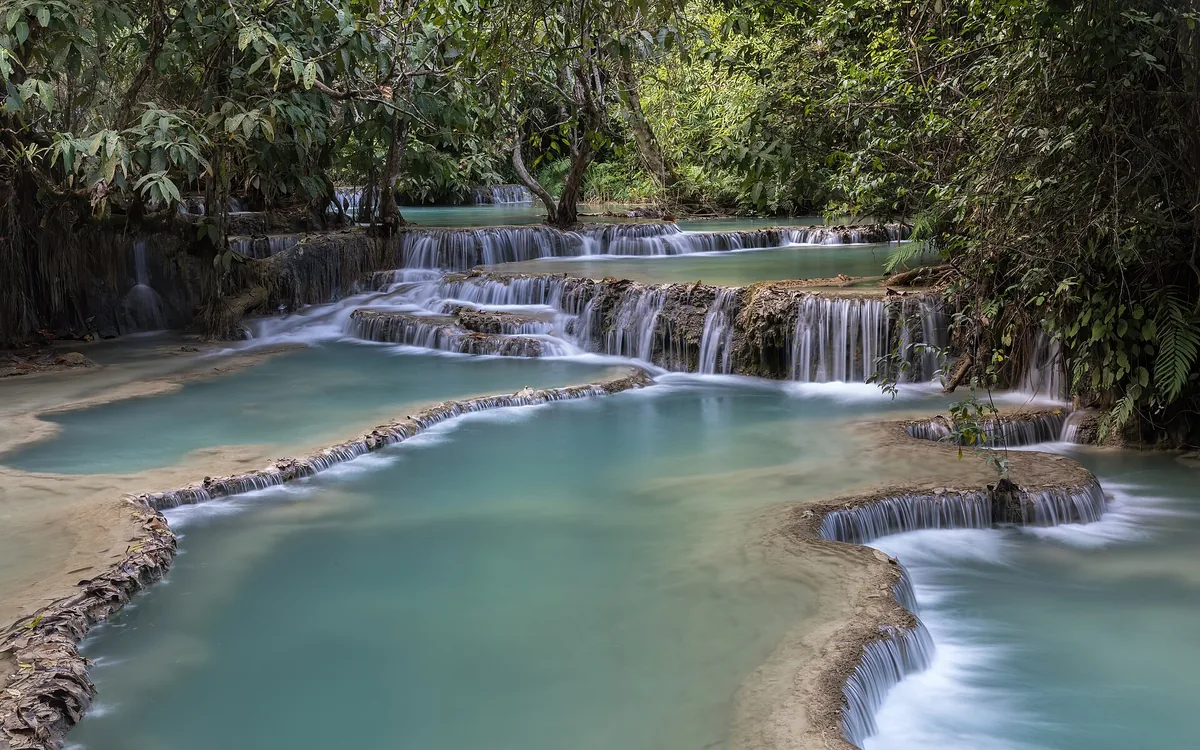
    Turquoise water over white limestone in a series of pools you can swim in, an hour south of town. The colour is real and it is a mineral effect — and it only looks like the photographs in the dry season. In the rains it runs brown and fast.

    The Sun Bear rescue centre is at the entrance and takes twenty minutes. Go early; the coaches arrive around eleven.

  2. Wat Xieng Thong

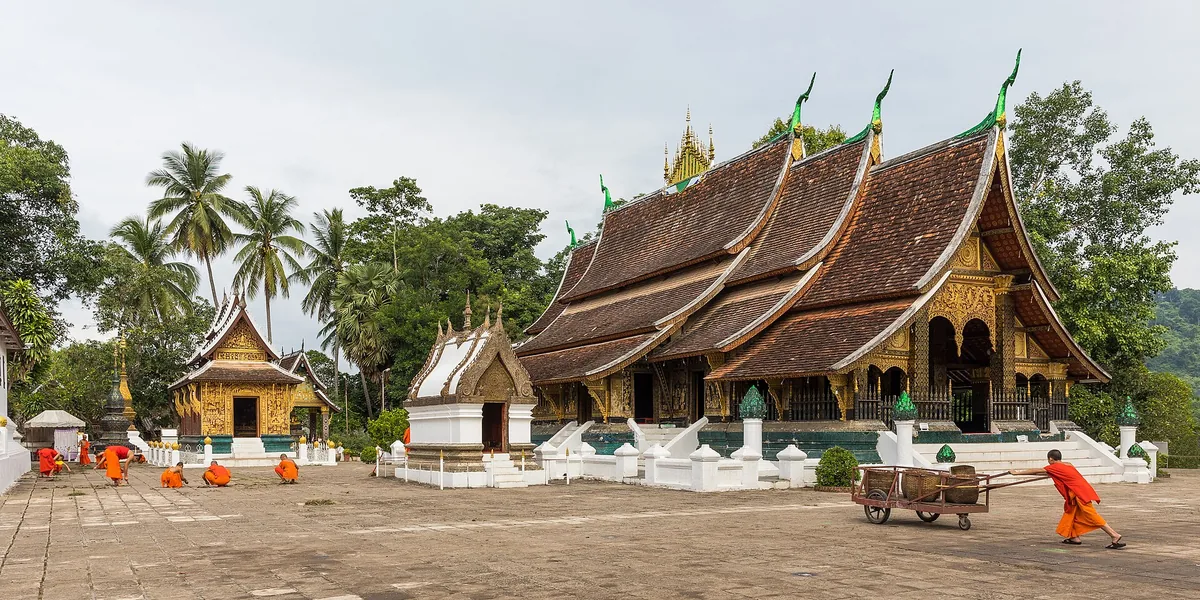
    The royal temple, built in 1560, and the finest thing in the town. The Tree of Life mosaic on the rear wall is what people photograph; the sweeping roof that almost touches the ground is what makes it.

    Shoulders and knees covered, shoes off at every building inside the compound.

  3. The Pak Ou caves, by boat

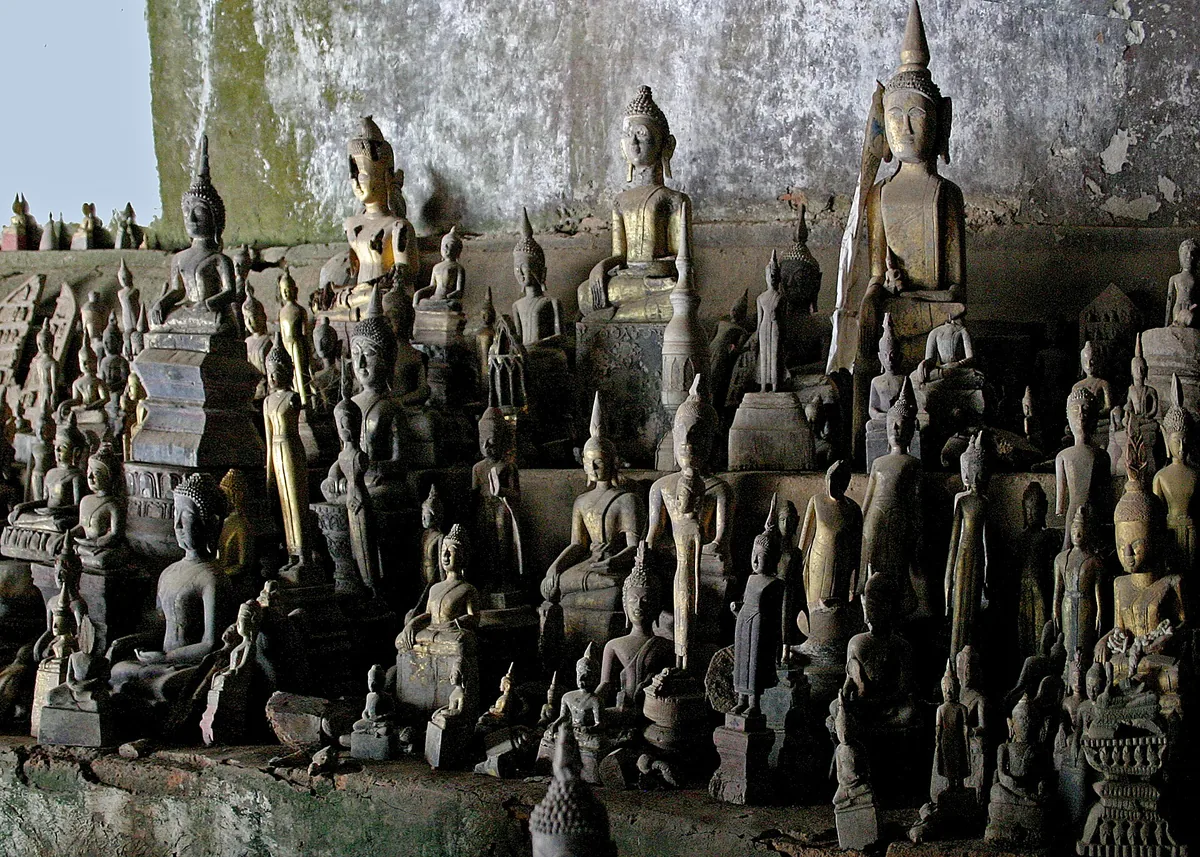
    Two hours up the Mekong to a pair of limestone caves stuffed with several thousand Buddha images left by pilgrims over four centuries. The boat ride is at least half the point.

    The stops on the way back — Ban Xang Hai for rice whisky, Ban Xang Khong for paper and weaving — are working villages, not a shopping trap.

  4. Tak Bat, the dawn alms round

    Several hundred monks walk the main street just after sunrise to receive rice from kneeling residents. It is an act of religious practice that happens to be beautiful, and it is not staged for anybody.

    If you watch: from across the street, seated or kneeling, no flash, no close-up faces. If you want to give, arrange it through the guide the night before rather than buying rice from a street hawker.

  5. The Royal Palace Museum

    The king's house until 1975, left much as it was. Small, and the quickest hour of history you will get in Laos.

    No photography inside, and bags go in a locker at the gate.

  6. The night market

    Sisavangvong road closes at dusk and fills with hill-tribe textiles, paper lanterns and a food lane where a plate costs a few rupees. It packs away by ten and the town goes quiet.

    Prices are negotiable and the opening one is roughly double. Do it cheerfully; nobody here haggles hard.

Small print

Worth knowing

The alms round is not a photo opportunity

Tak Bat is a daily religious observance that visitors have made genuinely difficult in places. Watch from across the street, stay lower than the monks, no flash, and do not photograph faces. Buying rice from a hawker to join in is the one thing local people ask visitors not to do.

Kuang Si is seasonal

The turquoise is a dry-season colour. From June to September the falls run brown and hard — impressive, and not what you have seen in pictures. If the photograph is the reason you are going, go between November and March.

Carry cash

Cards work at hotels and at nothing else you will want. ATMs exist and have low daily limits. Kip for the market and the tuk-tuks, dollars for the visa.

The town has a curfew and keeps it

Most places close by eleven and the night market packs away by ten. This is not a nightlife destination, and the quiet is a large part of why it is still beautiful.

Not sure where to start?

Talk to someone who has been. We will tell you honestly whether Luang Prabang suits the trip you have in mind.