Mountains, Three Hours Away

Kazakhstan

The ninth largest country on earth, and the nearest snow to India that does not need a Schengen visa. Almaty sits with its back to a 4,000-metre wall of mountains and its face to a city of boulevards and cafés.

Kazakhstan is the ninth largest country on earth and almost nobody in India has been, which is the opportunity. It is three hours from Delhi — closer than Bangkok — and it is the nearest place to India where you can stand in real snow in February without a European visa.

Almost everything a first trip wants is in one corner of it. Almaty sits at 800 metres with a wall of four-thousand-metre mountains at its back, close enough that you can have breakfast on a boulevard and be at the top of a ski lift by eleven. It is a green, low-rise, café-going city that feels far more European than its map position suggests.

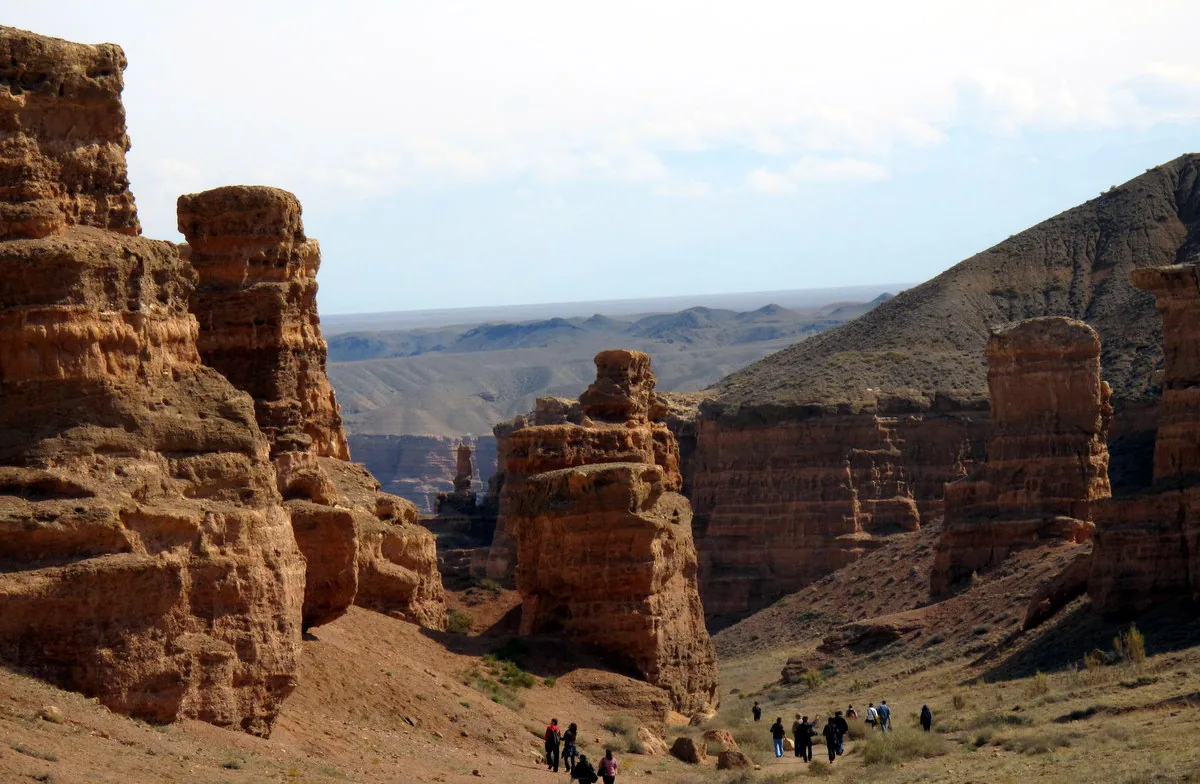
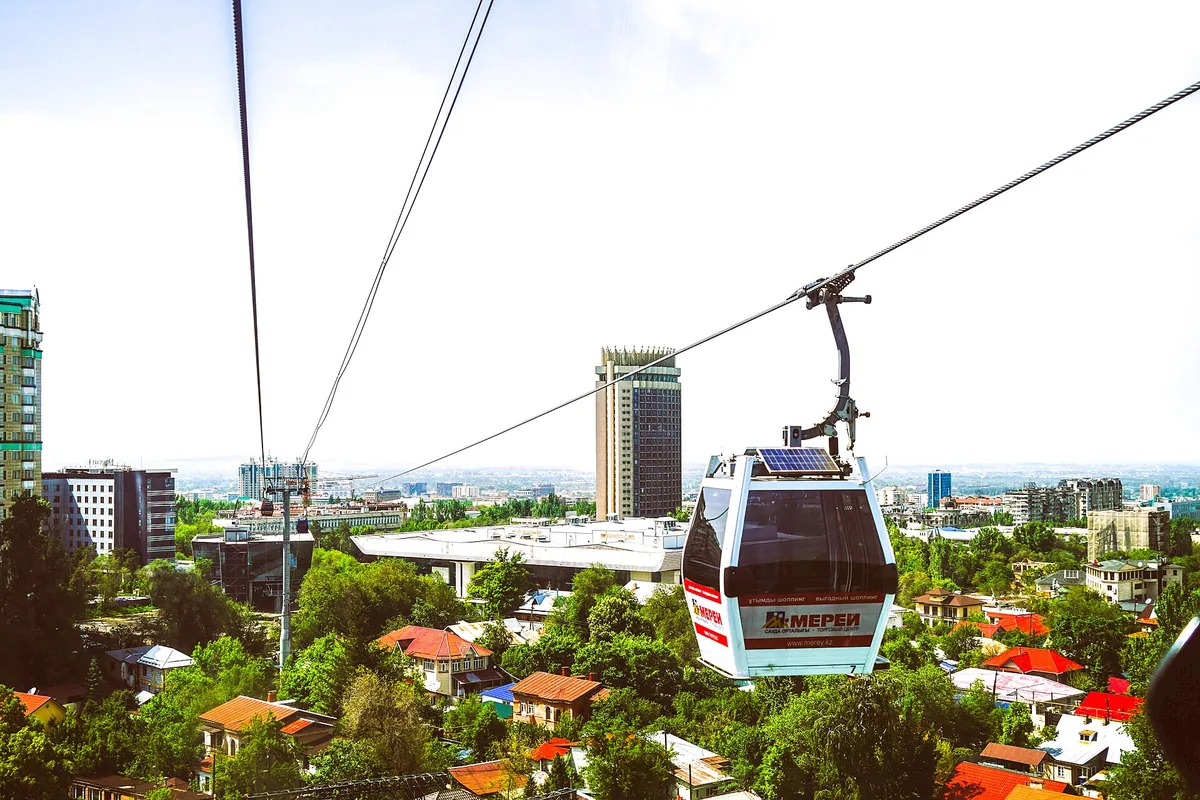
Four nights covers the city, the skating rink at Medeu, the slopes at Shymbulak and the cable car up Kok-Tobe. A fifth and sixth buy you the Charyn Canyon and the alpine lake above the city, which are the two days people come home talking about.

Airports
Almaty (ALA), Astana (NQZ)
Almaty is the one that matters and the one with the non-stop from Delhi. It is 15 km from the city centre.
Best months
April to June, September to October
Two shoulder seasons rather than one long one. December to March is the ski season and a completely different trip.
Getting there
About 3 hours from Delhi
Non-stop with Air Astana and IndiGo. From anywhere else in India you connect through Delhi, which usually means an overnight one way.
Nights to allow
4 to 6
Four covers Almaty, Medeu, Shymbulak and Kok-Tobe. A fifth and sixth buy Charyn Canyon and Big Almaty Lake.
Clock
UTC+5
Thirty minutes behind India, which is the smallest time difference on any trip we sell. Nobody arrives jet-lagged.
Money
Kazakhstani tenge
Cards are accepted almost everywhere in Almaty — more readily than in most of Southeast Asia. Carry a little cash for the bazaar and the mountain cafés.

Where to go

Places in Kazakhstan

Decide first

Which part of Kazakhstan, and who each one suits

The part we sell, and the part to see first Non-stop from Delhi

Choose it if

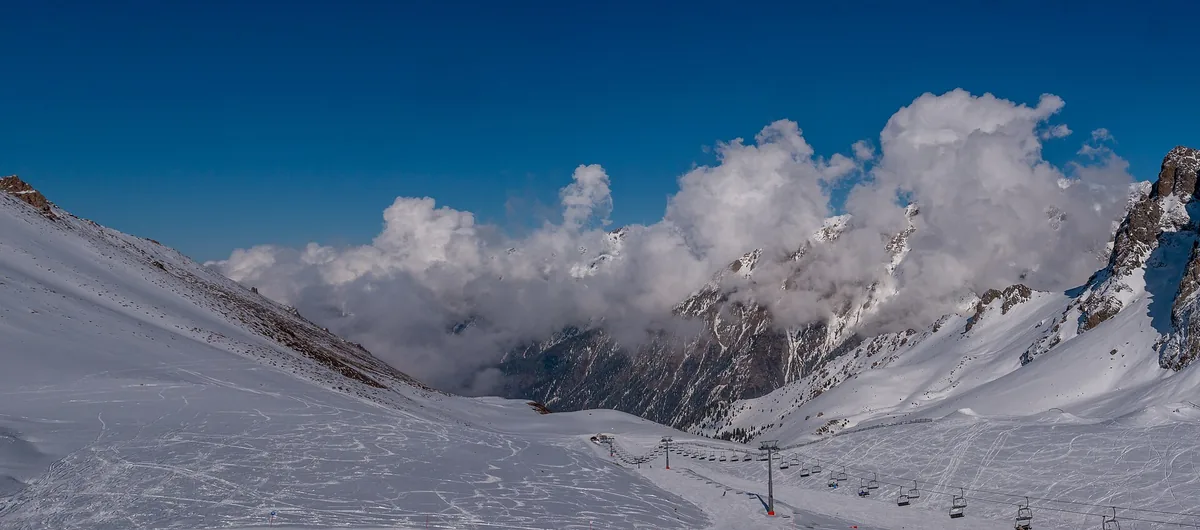
  • You want mountains without a long-haul flight. The ski slopes at Shymbulak are forty minutes from a city-centre hotel.
  • It is your first time in Central Asia. Almaty is the easiest, greenest and most comfortable city in the region.
  • You have four or five nights. Everything worth doing sits inside a day trip of the city.
  • You are travelling with parents or children — the altitude is gentle, the roads are good and the food problem is solvable.

Think twice if

  • You came for desert and steppe. Almaty is the green corner; the empty half of the country is a long way north and west.
  • You want a beach. This is the largest landlocked country in the world.

Decide second

When to travel, month by month

taller bar means more rain

Pick a month to read it in full.

Deep winter, and the ski season

January

Rain
Wet spells
How busy
Steady
Daytime
-9 to -1°C

Properly cold and properly snowy, which is the point if you are coming for Shymbulak. The city is grey and the mountains are not. Pack as you would for Gulmarg, not for Dubai.

Background

A little history

The apple is the place to start. Genetic work in the 1990s traced the domestic apple back to Malus sieversii, which still grows wild in the mountain forests above Almaty — every apple in every orchard on earth descends from this hillside. The city’s older name, Alma-Ata, means something close to “father of apples”.

What is now Kazakhstan was steppe travelled by nomadic Turkic and Mongol peoples for two thousand years, crossed by the northern branch of the Silk Road. The Kazakh Khanate formed in the fifteenth century. Russian expansion arrived in the eighteenth and nineteenth, and the fort that became Almaty was founded in 1854.

The Soviet century was heavy here: forced settlement of the nomads and the famine that followed, the Gulag camps, the closed nuclear test site at Semipalatinsk, and Baikonur, from which Gagarin left the planet. Independence came in 1991. Almaty was the capital until 1997, when the government moved north to a new city on the steppe — which is why the country’s best-looking city is not its capital.

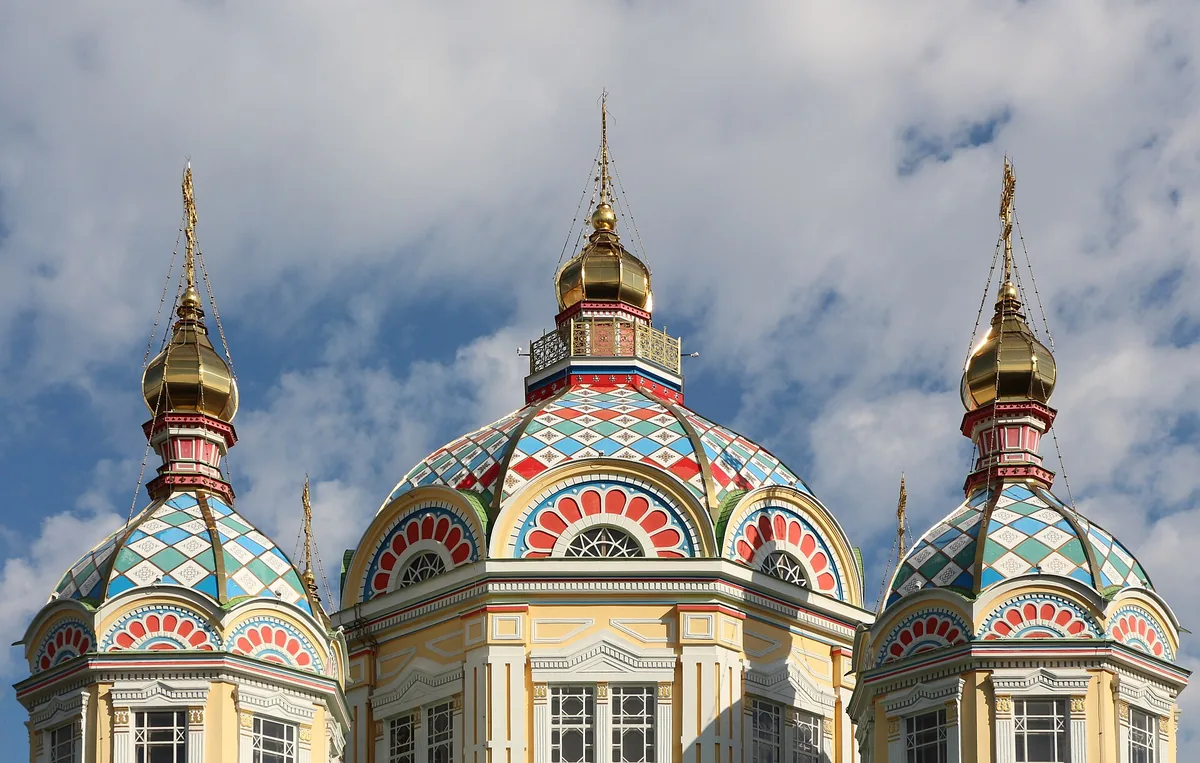
The painted domes of Zenkov Cathedral in Panfilov Park, Almaty, against a blue sky.
Photo: Bgag · CC0
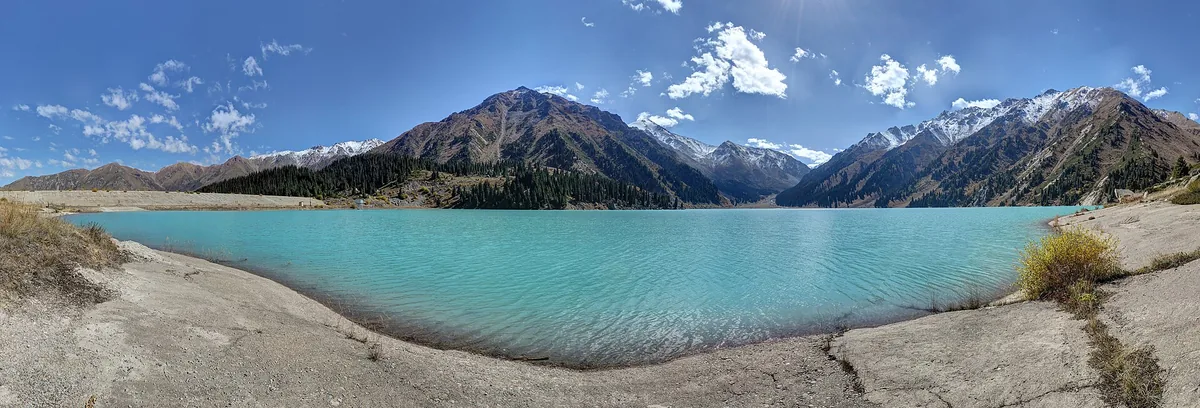
The turquoise water of Big Almaty Lake in a bowl of snow-topped peaks.
Photo: Igors Jefimovs · CC BY 3.0

Almaty is named for its apples. The wild ancestor of every apple in the world grows in the hills behind the city.

Practical

Know before you go

Visas and entry

This is the one thing on this page we will not print a rule for.

Kazakhstan has run an e-visa, a visa-on-arrival and a visa-free arrangement for Indian passport holders at different points in the last few years, and has changed between them at short notice. Anything stated here would be out of date before it was useful.

We confirm the current position in writing when we quote your dates, and again before you pay. Your passport needs six months of validity whichever rule is in force.

Money

The Kazakhstani tenge. It carries a lot of zeros — a 1,000 tenge note is somewhere near ₹190, though the rate moves and that is indicative rather than a promise. Check it the week you travel.

Kazakhstan is further along with card payments than most of Asia. Kaspi, the local payment app, is used for almost everything and contactless cards work in taxis, cafés and shops across Almaty. Carry a modest amount of cash for the Green Bazaar, mountain cafés and tips, and no more.

The country in brief

Size
2.72 million km², the ninth largest country on earth and larger than Western Europe
People
About 20 million, in a country the size of Western Europe
Coast
None — the largest landlocked country in the world
Capital
Astana. Almaty is the largest city and was the capital until 1997
Highest point
Khan Tengri, 7,010 m
Clock
UTC+5 — thirty minutes behind IST
Traffic
Drives on the right

Two worth carrying. Kazakhstan holds the world’s largest uranium reserves and produces roughly two fifths of the global supply. And the country moved to a single time zone in 2024, having previously run two — so the whole of a country wider than Australia now keeps one clock.

Plugs and power

220 volts at 50 hertz, with European round two-pin sockets — types C and F. Indian round-pin plugs go in without an adapter more often than not; a universal adapter removes the doubt.

Power is reliable in Almaty. In the mountain guesthouses above the city it occasionally is not, so charge things when you can.

220 volts, 50 hertz — near enough the same as home.

Language

Kazakh is the state language and Russian is the language of the street, particularly in Almaty. Both are written in Cyrillic, which makes signage genuinely hard to read if you have never met the alphabet — learning the ten most common letters on the flight is worth the twenty minutes.

English is spoken at hotel desks, by guides and by younger people in the centre, and thins out fast beyond that. A guide matters more here than almost anywhere else we sell — check what your package includes, because on the Almaty itinerary a dedicated English-speaking guide comes with parties of eight and up, and smaller parties travel with an English-speaking driver unless you ask us to add one.

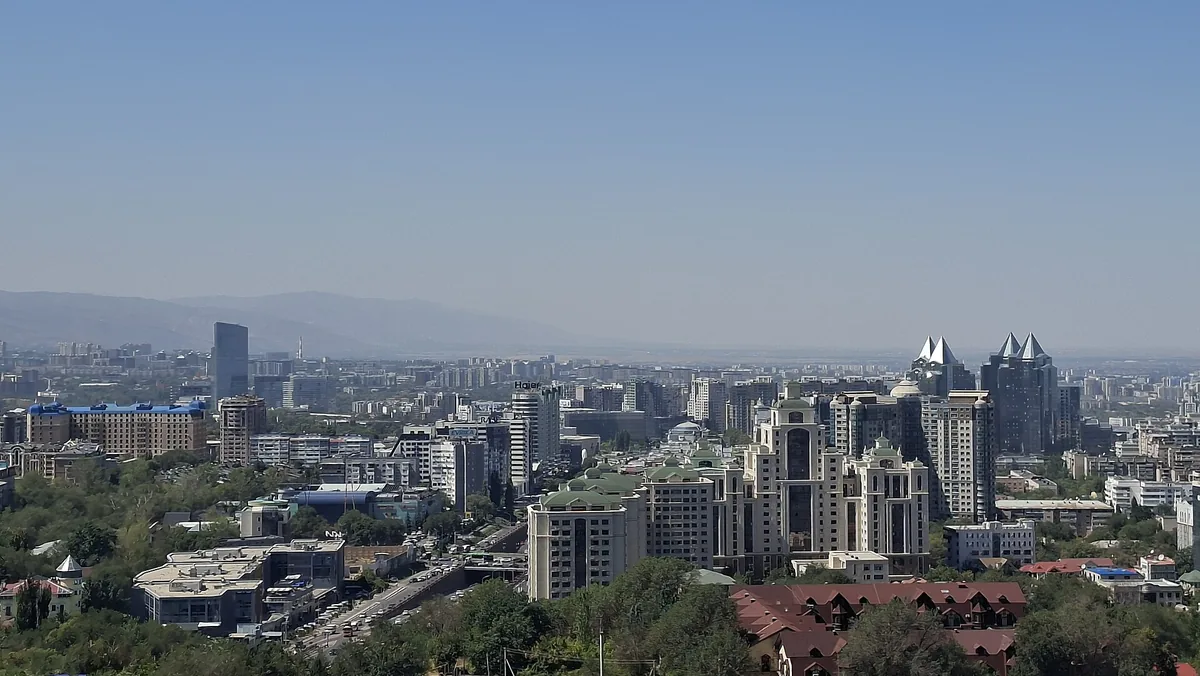
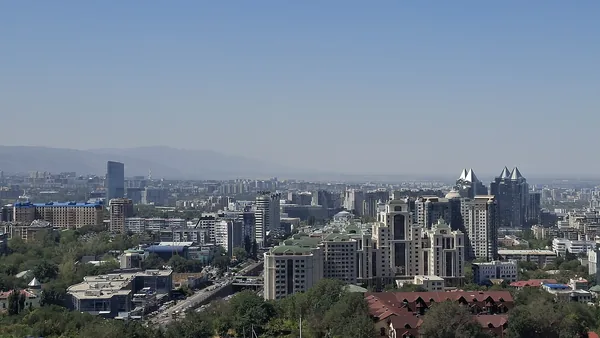
The Almaty skyline seen from Kok-Tobe hill, the Tien Shan range hazy behind it.

Food

Be straight about this one: Kazakh food is built on meat. Beshbarmak — boiled meat and flat noodles — is the national dish. Plov, lagman, manti and shashlik fill out the rest, and horse and mutton are ordinary rather than exotic.

Almaty is a cosmopolitan city and has good Georgian, Korean, Uzbek and Turkish restaurants. But vegetarian and Jain travellers should plan rather than improvise — this is markedly harder than Thailand or Sri Lanka.

Which is why the itineraries we sell here take every meal at Indian restaurants in Almaty, of which there are several good ones. It reads like a lack of adventure on paper and it is the single thing our travellers thank us for most.

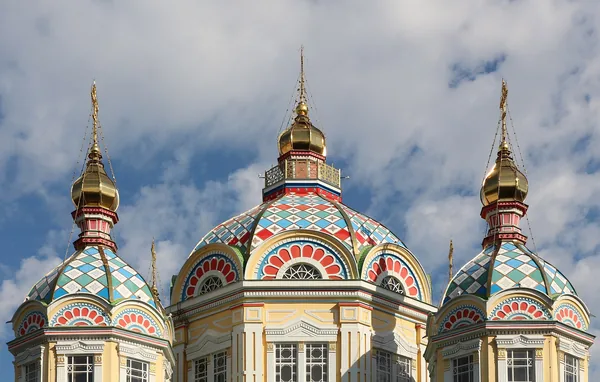
The painted domes of Zenkov Cathedral in Panfilov Park, Almaty, against a blue sky.

People and culture

Majority Muslim, largely secular, with a substantial Russian Orthodox minority and a long habit of the two living side by side. Almaty has a wooden cathedral and a central mosque within a few kilometres of each other and makes nothing of it.

Hospitality is taken seriously in a way that descends directly from the nomadic centuries — if you are invited to eat, you eat. Removing shoes indoors is normal. Dress is European and relaxed in Almaty; cover shoulders and knees at the mosque.

Nauryz, the spring new year on 21 March, is the big one. If your dates fall near it, say so and we will build around it.

How the country is run

A presidential republic, independent since 1991. Politically stable for visitors, and there is no sensitivity about photography beyond the usual: not at military sites, not at border posts.

Registration used to be a chore for foreign visitors and no longer is for short tourist stays — your hotel handles it. Keep your passport with you; police checks are uncommon but not unknown.

Worth knowing before you go

Almaty is a safe city by the standards of any large city, and safer than most. The ordinary precautions are the ordinary ones: use the Yandex Go app rather than flagging an unmarked car, watch your pockets in the Green Bazaar, and do not walk home alone very late.

The real risks here are environmental rather than criminal. Altitude: Big Almaty Lake is at 2,500 m and the Shymbulak lifts reach 3,163 m, which is high enough to leave people short of breath. Go up slowly and drink water.

Mountain weather turns fast and the temperature at the top of the lift can be fifteen degrees below the city. Take a layer even in July. And the sun at that altitude burns much harder than the air temperature suggests.

Not sure where to start?

Talk to someone who has been. We will tell you honestly whether Kazakhstan suits the trip you have in mind.

Photography