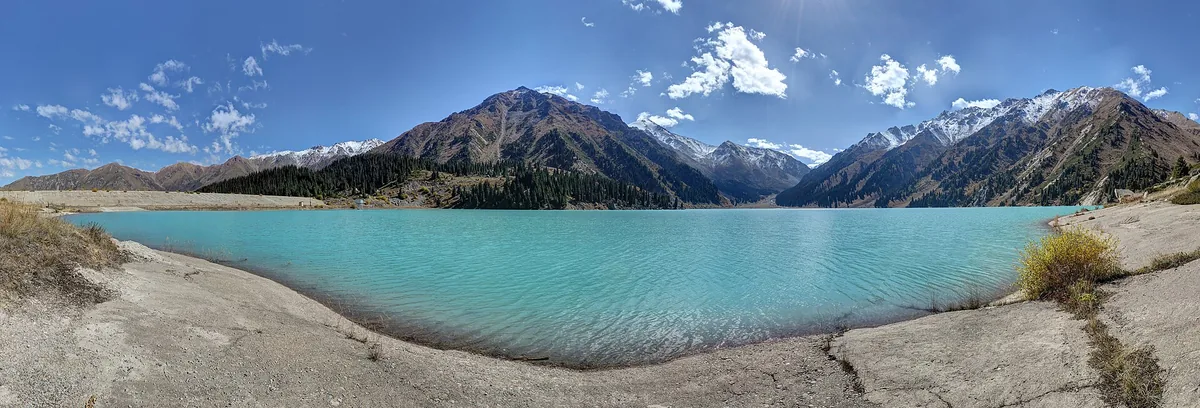
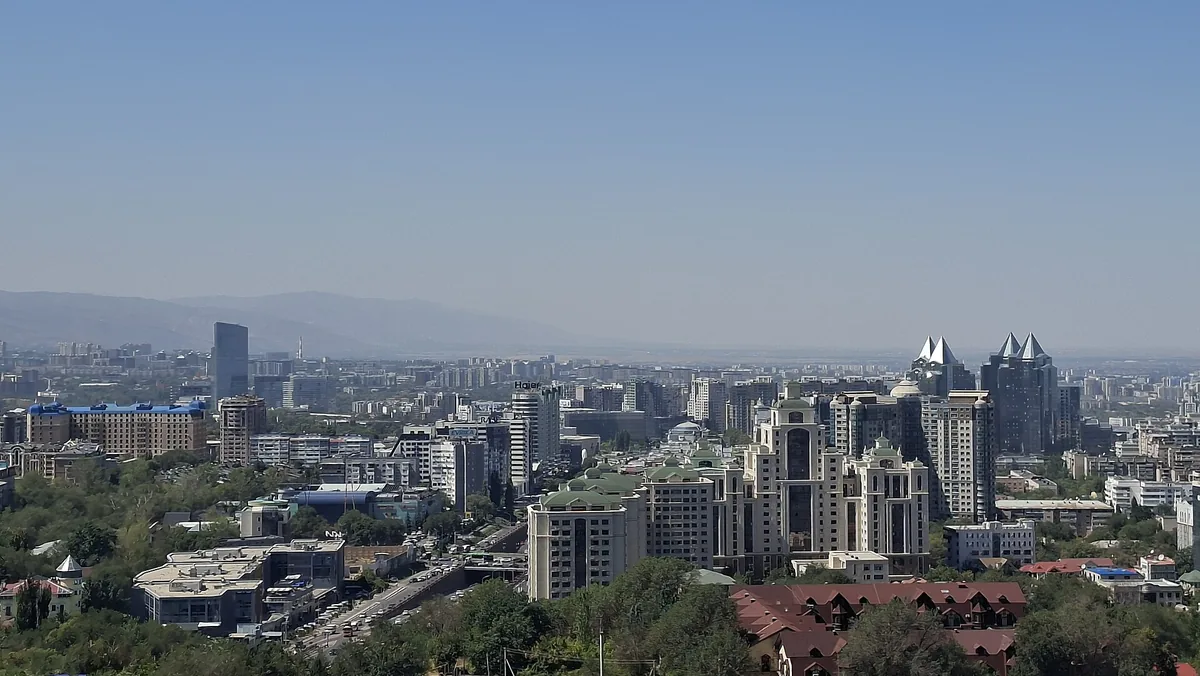
The apple is the place to start. Genetic work in the 1990s traced the domestic apple back to Malus sieversii, which still grows wild in the mountain forests above Almaty — every apple in every orchard on earth descends from this hillside. The city’s older name, Alma-Ata, means something close to “father of apples”.
What is now Kazakhstan was steppe travelled by nomadic Turkic and Mongol peoples for two thousand years, crossed by the northern branch of the Silk Road. The Kazakh Khanate formed in the fifteenth century. Russian expansion arrived in the eighteenth and nineteenth, and the fort that became Almaty was founded in 1854.
The Soviet century was heavy here: forced settlement of the nomads and the famine that followed, the Gulag camps, the closed nuclear test site at Semipalatinsk, and Baikonur, from which Gagarin left the planet. Independence came in 1991. Almaty was the capital until 1997, when the government moved north to a new city on the steppe — which is why the country’s best-looking city is not its capital.