
Seven Emirates, One Stamp

United Arab Emirates

Three cities within ninety minutes of each other, a desert that starts where the last tower ends, and more direct flights from India than anywhere else abroad. The trip that works in four nights or fourteen.

The Emirates are the easiest trip abroad from India and the one most likely to be undersold to you. Everybody knows the tower and the mall. Fewer people know that the best building in the country is in Abu Dhabi, that the best museums are in Sharjah, and that ninety minutes past the last flyover the Empty Quarter starts and does not stop for six hundred kilometres.

Four nights in Dubai is a real holiday. Six nights gets you the capital and a night in the desert as well, and it is the version we book most.

Airports
Dubai, Abu Dhabi, Sharjah
Three international airports inside 120 km. Sharjah is the Air Arabia base and usually the cheapest way in from South India.
Best months
November to March
April and October are still workable. May to September is 40°C and humid, and priced to reflect it.
Flight time
3h 15m from Mumbai
Around 4h from Chennai and Bengaluru, 3h 30m from Delhi. More Indian cities fly here than to any other country.
Nights to allow
4 to 6
Four is enough for Dubai alone. Six gets you Abu Dhabi and a night in the desert without rushing any of it.
Visa
Depends on your other visas
On arrival if you hold a valid US, UK or Schengen visa or residence. Otherwise an e-visa arranged before you fly — we do it with the booking.
Money
UAE dirham
Pegged to the dollar and stable at roughly ₹26. Cards work everywhere. Indian rupees are not accepted and UPI works only at a few merchants.

Getting there

Direct flights to United Arab Emirates

Direct flights from India to United Arab Emirates Map of India marking 24 cities with direct flights to United Arab Emirates — Dubai from Amritsar, Chandigarh, Delhi, Jaipur, Lucknow, Ahmedabad, Indore, Kolkata, Surat, Nagpur, Mumbai, Pune, Hyderabad, Goa, Bengaluru, Chennai, Mangaluru, Kannur, Kozhikode, Coimbatore, Tiruchirappalli, Madurai, Kochi, Thiruvananthapuram; Abu Dhabi from Delhi, Jaipur, Lucknow, Ahmedabad, Kolkata, Mumbai, Hyderabad, Bengaluru, Chennai, Mangaluru, Kannur, Kozhikode, Coimbatore, Tiruchirappalli, Kochi, Thiruvananthapuram; Sharjah from Amritsar, Delhi, Jaipur, Lucknow, Ahmedabad, Nagpur, Mumbai, Pune, Hyderabad, Goa, Bengaluru, Chennai, Mangaluru, Kannur, Kozhikode, Coimbatore, Tiruchirappalli, Madurai, Kochi, Thiruvananthapuram. Amritsar Chandigarh Delhi Jaipur Lucknow Ahmedabad Indore Kolkata Surat Nagpur Mumbai Pune Hyderabad Goa Bengaluru Chennai Mangaluru Kannur Kozhikode Coimbatore Tiruchirappalli Madurai Kochi Thiruvananthapuram Dubai Abu Dhabi Sharjah

Indicative map, not to scale. It shows which cities fly direct — not exact positions or distances.

24 Indian cities fly direct to United Arab Emirates.

Dubai

  • Amritsar
  • Chandigarh
  • Delhi
  • Jaipur
  • Lucknow
  • Ahmedabad
  • Indore
  • Kolkata
  • Surat
  • Nagpur
  • Mumbai
  • Pune
  • Hyderabad
  • Goa
  • Bengaluru
  • Chennai
  • Mangaluru
  • Kannur
  • Kozhikode
  • Coimbatore
  • Tiruchirappalli
  • Madurai
  • Kochi
  • Thiruvananthapuram

Abu Dhabi

  • Delhi
  • Jaipur
  • Lucknow
  • Ahmedabad
  • Kolkata
  • Mumbai
  • Hyderabad
  • Bengaluru
  • Chennai
  • Mangaluru
  • Kannur
  • Kozhikode
  • Coimbatore
  • Tiruchirappalli
  • Kochi
  • Thiruvananthapuram

Sharjah

  • Amritsar
  • Delhi
  • Jaipur
  • Lucknow
  • Ahmedabad
  • Nagpur
  • Mumbai
  • Pune
  • Hyderabad
  • Goa
  • Bengaluru
  • Chennai
  • Mangaluru
  • Kannur
  • Kozhikode
  • Coimbatore
  • Tiruchirappalli
  • Madurai
  • Kochi
  • Thiruvananthapuram

Who flies it

  • Emirates
  • Etihad Airways
  • Air Arabia
  • IndiGo
  • Air India Express
  • Air India

Decide first

Which emirate, and who each one suits

The one everyone means At the airport

Choose it if

  • It is your first trip here. Everything is signposted in English, the metro works, and nothing about the day requires you to have planned it.
  • You are travelling with children — the aquarium, the fountain, the waterparks and the indoor ski slope are all inside the same forty minutes of road.
  • You want the shopping. Not just the malls; the gold souk in Deira is still the largest of its kind anywhere.
  • Your trip is short. A four-night first visit that never leaves Dubai is a complete holiday, not a compromise.

Think twice if

  • You want somewhere old. Almost everything you will photograph was built after 1990.
  • You are on a tight budget in the high season, when hotel rates here run at two to three times the summer price.
  • You dislike crowds. School holidays in India, the Gulf and Europe all land on this city at once.

Decide second

When to travel, month by month

taller bar means hotter

Pick a month to read it in full.

Peak season

January

Heat
Cool
How busy
Busy
Daytime
15 to 24°C

The best weather of the year and priced accordingly. Cool enough for a jacket after dark, warm enough to sit outside at lunch, and the one month when walking around Old Dubai in the middle of the day is a pleasure rather than an ordeal.

Background

A little history

The country is younger than most of the people reading this. Seven emirates that had been British-protected states since the nineteenth century federated on 2 December 1971; Ras Al Khaimah joined two months later. Before that the coast lived on pearls, fishing and the dhow trade with India and East Africa, and Dubai had built its position on being the port that charged the least — a decision taken in 1901 that is still, recognisably, the national strategy.

The pearl trade collapsed in the 1930s when a Japanese company worked out how to culture them, and the following two decades were the hardest the coast had known. Oil changed that: Abu Dhabi struck it in 1958, Dubai in 1966. Sheikh Zayed bin Sultan Al Nahyan, the first president, spent the money on roads, schools, hospitals and trees, and is spoken about here in a way that has not faded in the twenty years since he died.

The part people underestimate is how deliberately Dubai planned for the oil to run out — it never had much. Jebel Ali port opened in 1979, the free zone in 1985, Emirates airline the same year with two leased aircraft. Today petroleum is a small share of Dubai’s economy and the emirate lives on trade, logistics, tourism and finance. The towers are the advertisement. The port is the business.

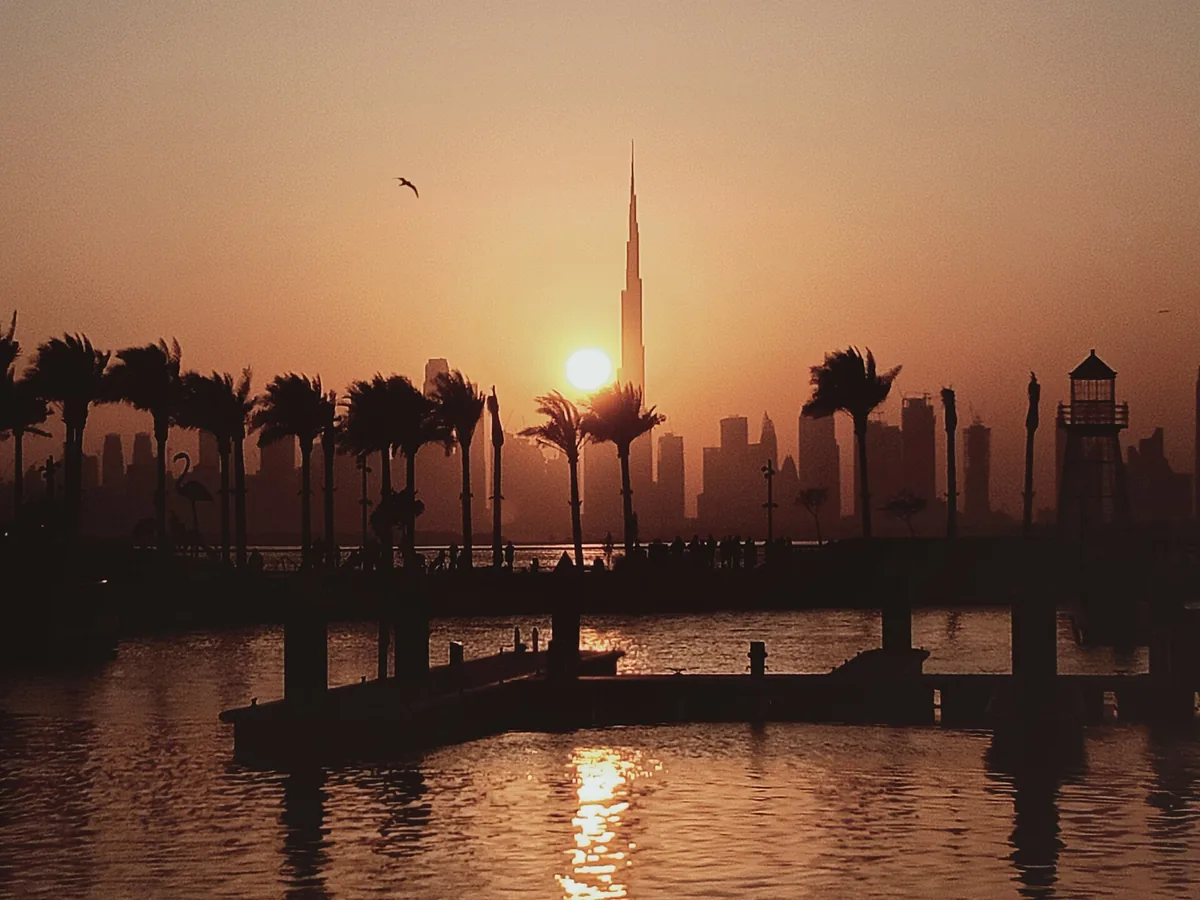
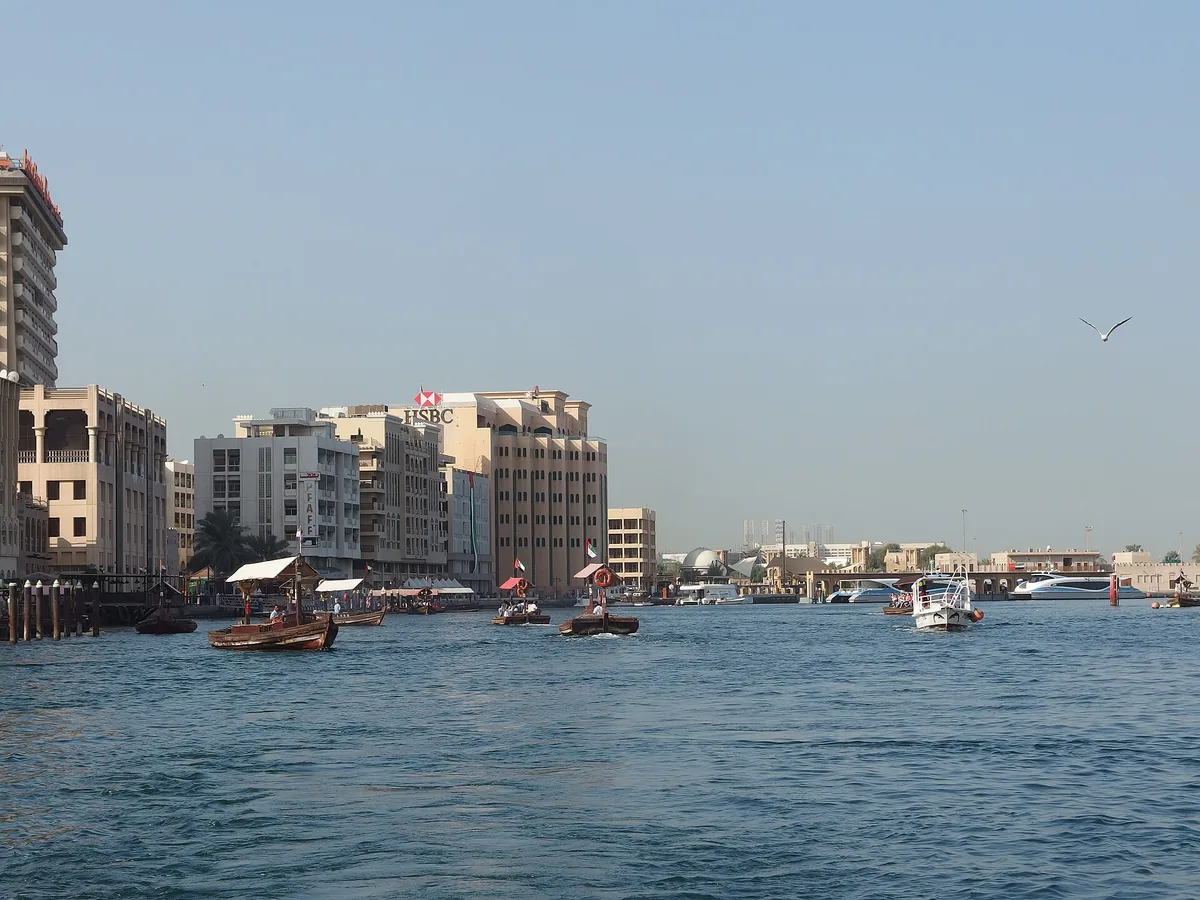
An abra crossing Dubai Creek between Bur Dubai and Deira.
Photo: Guilhem Vellut · CC BY 2.0
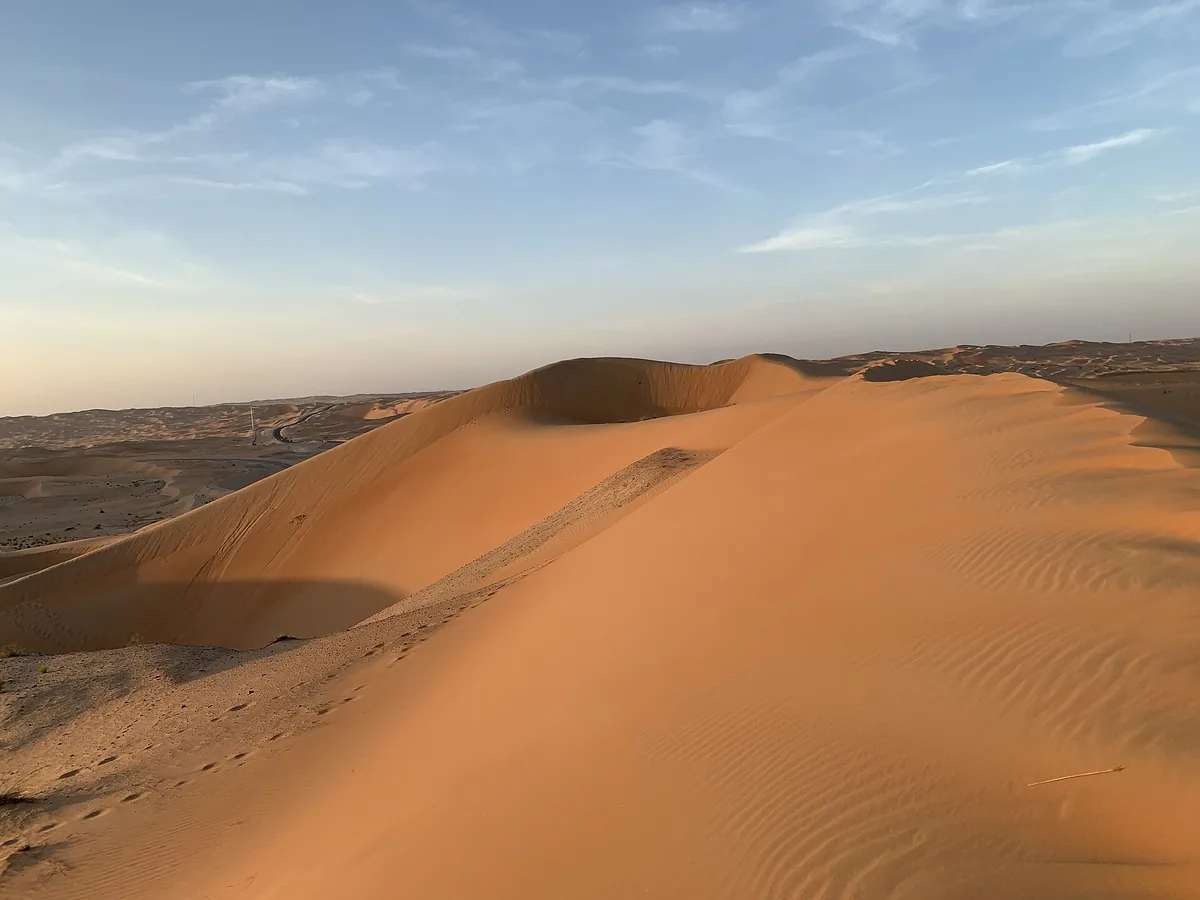
The sand dunes of the Rub al Khali, the desert that runs south from the Emirates.
Photo: Srk60 · CC BY-SA 4.0

Ninety years ago the country's main export was pearls, and the industry had just been ruined by a Japanese invention.

Practical

Know before you go

Visas and entry

There are two routes and which one you take depends on what else is in your passport.

Visa on arrival is available to Indian passport holders who also hold a valid visa or residence permit for the United States, the United Kingdom or the Schengen area — including a US green card. It runs 14 days and can be extended once. Your passport needs at least six months of validity.

Everyone else needs a visa before flying, arranged through an airline, hotel or tour operator rather than applied for directly. Tourist visas come in 14, 30 and 60-day versions, single or multiple entry. We arrange this as part of the booking and tell you exactly which one you are getting.

Two things that catch people out: immigration can ask for a return ticket, a hotel booking and evidence of funds, so keep all three on your phone; and a visa refused or overstayed anywhere in the GCC will follow you here.
Money

The dirham, written AED or Dh, and pegged to the US dollar at a fixed 3.6725 — which is why the rate barely moves and why a price quoted here in dirhams six months ahead means something. One dirham is roughly ₹26, so a Dh 100 lunch is about ₹2,600. Treat that as indicative and check the week you travel.

Cards work everywhere, including in taxis and at most souq stalls. Carry a little cash for the abra across Dubai Creek, which costs a dirham, and for tipping. Indian rupees are not accepted anywhere and UPI is accepted at a growing but still small handful of merchants — do not plan around it.

Tourists can reclaim the 5% VAT on shopping at the airport, which is worth doing if you have bought gold or electronics. Keep the tagged receipts and allow an extra thirty minutes before your flight.

The country in brief

Size
83,600 km², a little larger than Andhra Pradesh
Made of
7 emirates — Abu Dhabi, Dubai, Sharjah, Ajman, Umm Al Quwain, Ras Al Khaimah, Fujairah
People
About 11 million, of whom roughly one in ten is an Emirati citizen
Indians here
Around 3.5 million — the largest nationality in the country
Highest point
Jebel Jais, 1,934 m, in Ras Al Khaimah
Founded
2 December 1971
Clock
UTC+4 — an hour and a half behind IST
Traffic
Drives on the right, unlike home

Two worth carrying. Abu Dhabi is about 87% of the country’s land area, which means the emirate everyone talks about is a small corner of the map. And the working week runs Monday to Friday with a half-day Friday — the UAE moved off the Gulf weekend in 2022 and is the only country in the region that did.

Plugs and power

Sockets are the British three-pin type G, at 230 volts and 50 hertz. Your Indian round-pin plugs will not fit, so pack one universal adapter — the same one you would take to the UK — and everything else in your bag works unchanged.

Most hotels keep a box of adapters at reception and will lend you one, but not on a busy check-in evening.

Type G British square pins. The one to pack an adapter for.

230 volts, 50 hertz — the same as home, so nothing needs a converter.

Language

Arabic is the official language and English is the working one. Every sign, menu, ticket machine and government form is bilingual, and you can complete an entire trip without learning a word of Arabic.

The more useful fact for an Indian traveller: Hindi, Malayalam, Tamil, Urdu and Telugu are spoken in most shops, taxis and hotels, because the people in them are from home. Ordering in your own language is normal here, not a lucky break.

An abra crossing Dubai Creek between Bur Dubai and Deira.

Food

Emirati food itself is quiet and hard to find — machboos, a spiced rice with meat that will remind you of biryani’s ancestors; harees, wheat and meat beaten to a porridge; luqaimat, fried dough balls in date syrup. A handful of restaurants do it properly and they are worth seeking out precisely because they are not what the city advertises.

What the country actually eats is Lebanese, Iranian, Pakistani, Filipino and above all Indian. South Indian breakfast in Karama and Bur Dubai is as good as it is at home and costs about three times as much. Shawarma from a street counter is the standard late meal and runs Dh 8 to 15.

Vegetarians and Jains eat extremely well here — better than anywhere else in the Gulf, and with no notice required. All meat is halal by default. Pork is sold, in separate rooms in a few supermarkets, and served only in licensed venues.

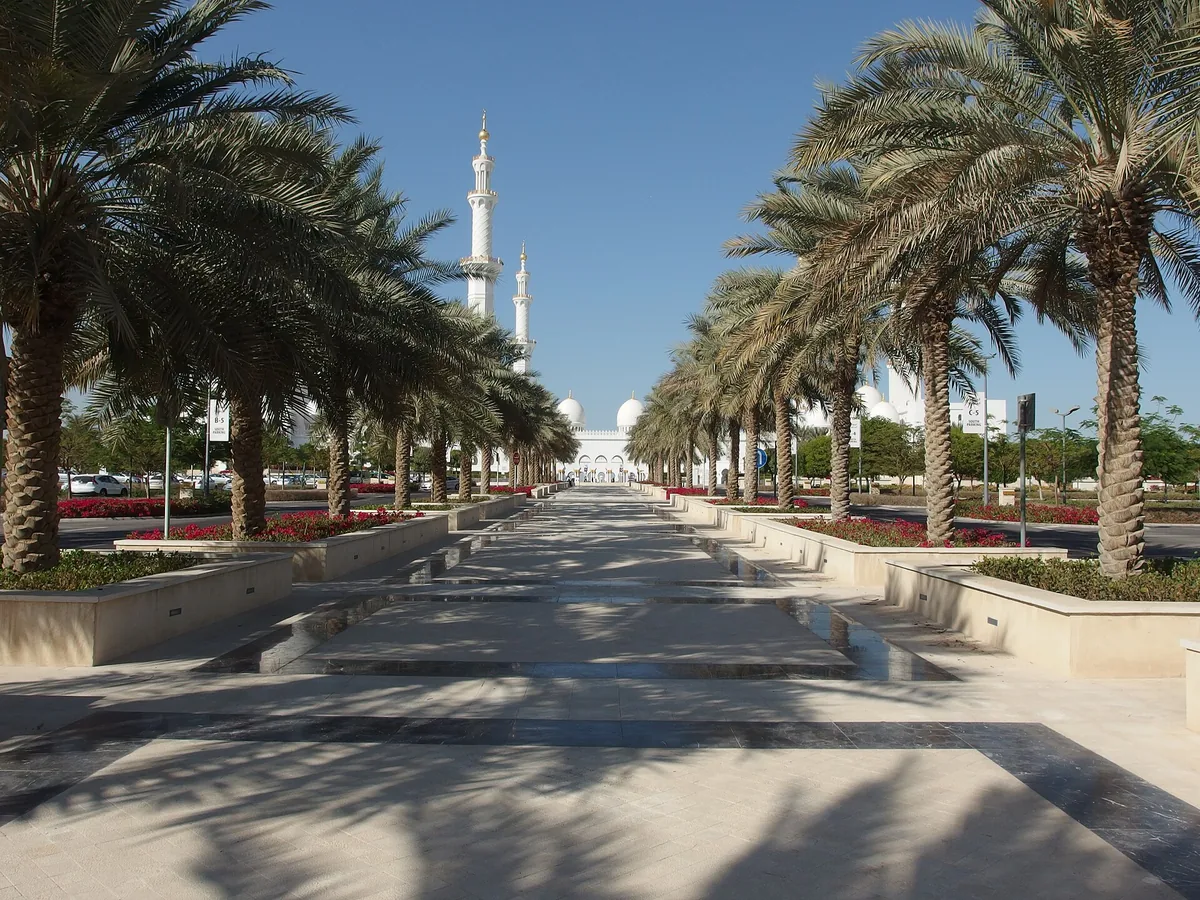
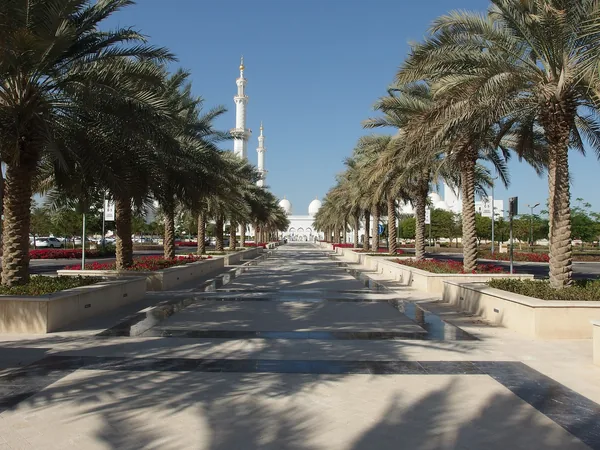
The palm avenue leading to the white domes and minarets of the Sheikh Zayed Grand Mosque, Abu Dhabi.

People and culture

About 11 million people, of whom around one in ten holds an Emirati passport. The rest are here to work, and the largest single group is Indian. That shapes the whole experience: you will hear Malayalam in the taxi, Tagalog at the hotel desk and Arabic mainly in government offices.

Islam is the state religion and the practice is visible — the call to prayer five times a day, Ramadan observed nationally, Friday prayers emptying the roads at midday. It is also unusually accommodating: churches and temples operate openly, and the Hindu temple in Jebel Ali and the newer one in Abu Dhabi are both substantial.

Dress modestly in public — shoulders and knees covered is the safe rule, and required at mosques and in Sharjah generally. Swimwear is for the beach and the pool, and only there.

How the country is run

A federation of seven emirates, each with its own hereditary ruler, governed together through a Federal Supreme Council. The ruler of Abu Dhabi is the president and the ruler of Dubai is the prime minister, by long-standing convention rather than by election.

What matters to a visitor is that the emirates set many of their own rules. Alcohol, dress codes, licensing and public behaviour are decided locally, which is why Sharjah is dry and Dubai is not, and why the answer to “is this allowed here” genuinely changes across a thirty-kilometre drive.

Worth knowing before you go

The laws that catch visitors out are mostly about behaviour in public, and they are enforced. Drinking or being drunk outside a licensed venue, public displays of affection beyond holding hands, rude gestures in traffic, and swearing at someone — including in a WhatsApp message — are all offences here. So is photographing people, and especially women and children, without asking.

Drugs carry severe penalties and the definition is broader than you expect: several prescription and over-the-counter medicines that are ordinary in India are controlled substances here, codeine and tramadol among them. If you take anything regularly, carry the prescription and check the list before you pack.

During Ramadan, eating, drinking and smoking in public during daylight is not done, visitor or not. Restaurants stay open behind screens and hotels serve normally. The dates move about eleven days earlier each year; we confirm them when we quote.

Beyond that it is one of the safest countries you will travel in. Solo women travel comfortably, the tap water is drinkable, and leaving a phone on a café table is a risk in the sense that it might rain.

Not sure where to start?

Talk to someone who has been. We will tell you honestly whether United Arab Emirates suits the trip you have in mind.

Photography